
Kratom is one of those substances that slips in through the side door. Nobody sets out to get hooked on a herbal powder they bought at a vape shop or ordered online. It starts as a way to take the edge off pain, to feel a little more energy, or to get through the day without opioids. Then one morning you skip a dose and your body lets you know, in no uncertain terms, that it now expects the drug.
If that sounds familiar, either for you or for someone you care about, you are not imagining it and you are not weak. Kratom acts on the same brain receptors as opioids like morphine and oxycodone, which means it can create real physical dependence and a withdrawal that feels a lot like the flu crossed with a panic attack. The encouraging part is that kratom dependence responds well to treatment, and Canadians have solid options for getting through it safely.
This guide walks through what kratom actually is, whether it is legal in Canada, how to recognize addiction, what withdrawal looks like day by day, and how treatment works here at home. If you would rather talk to a person right now, you can reach a confidential drug and alcohol helpline any time.
What is kratom?
Kratom (Mitragyna speciosa) is a tropical tree in the coffee family that grows across Southeast Asia, mainly Thailand, Indonesia, Malaysia, and Papua New Guinea. For generations, workers in those regions chewed the fresh leaves or brewed them into a tea to fight fatigue and ease aches. In North America it usually shows up as a dried green powder, packed into capsules, pressed into tablets, or sold as a concentrated extract.
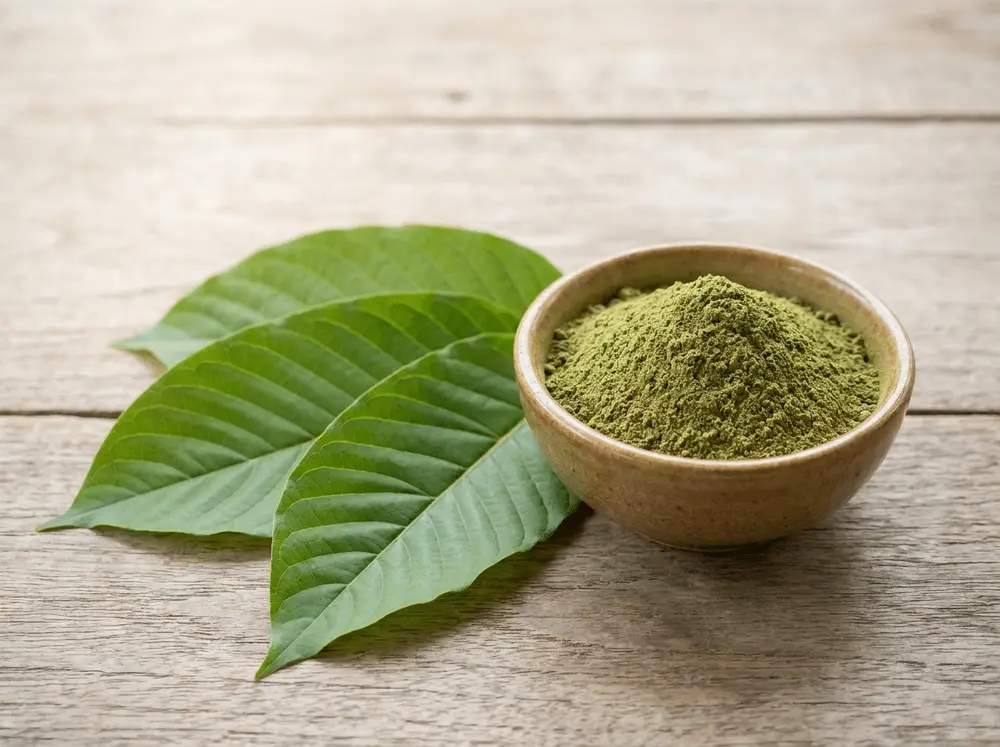
Kratom leaves and powder contain mitragynine and 7-hydroxymitragynine, which act on the brain’s opioid receptors.
The leaf contains dozens of active compounds, but two matter most. Mitragynine is the main one, and it makes up the bulk of the plant. The second, 7-hydroxymitragynine (often shortened to 7-OH), is present in tiny amounts naturally but is far more potent. Both bind to the body’s mu-opioid receptors, the same targets that prescription and street opioids hit. That is the whole story of why kratom can hook people the way it does.
Why people start using it
Most people do not try kratom to get high. They reach for it because it promises to solve a problem. At low doses it acts more like a stimulant, giving a coffee-style lift and a mild sense of wellbeing. At higher doses the opioid effects take over, bringing pain relief, sedation, and calm.
Common reasons people give: managing chronic pain without a prescription, trying to self-treat anxiety or low mood, boosting energy and focus, and, very often, using kratom to blunt the withdrawal from stronger opioids. That last one is the trap. People leaving heroin or fentanyl sometimes turn to kratom as a supposedly safer bridge, only to find they have swapped one opioid dependence for another.
Is kratom legal in Canada?
This is where things get confusing, because the answer is both yes and no. Kratom and its alkaloids are not scheduled under Canada’s Controlled Drugs and Substances Act. You will not be arrested for possessing it. But that does not make it an approved product.
Health Canada treats kratom as an unauthorized natural health product. It has not been approved for human consumption, so selling it as something to swallow, or advertising any health benefit, breaks the Food and Drugs Act and the Natural Health Products Regulations. That is why you see it sold as “incense,” “botanical specimen,” or “not for human consumption,” a wink-and-nod label that lets shops move the product while sidestepping the rules.
The practical result is a completely unregulated market. There is no quality control on potency, no purity testing, and no consistency between batches or brands. One bag might be mild, the next dangerously strong, especially with the newer concentrated 7-OH products that have flooded the market.
The 7-OH problem
Regulators on both sides of the border have grown especially worried about 7-hydroxymitragynine. Because it is a much stronger opioid than plain leaf kratom, concentrated 7-OH products carry a higher risk of dependence and overdose. In July 2025, United States health agencies moved to classify synthetic 7-OH as a Schedule I controlled substance. Canada has not scheduled it as of 2026, but the direction of travel is clear, and these products are exactly the ones causing the most harm.
| Question | Canada (2026) |
|---|---|
| Is kratom a controlled substance? | No, not scheduled under the CDSA |
| Can it be sold for consumption? | No, Health Canada has not authorized it as a natural health product |
| How is it usually sold? | Labelled “not for human consumption” to skirt regulations |
| Is it quality controlled? | No, potency and purity are unregulated and vary widely |
| Is 7-OH regulated? | Not scheduled in Canada as of 2026, but flagged as high risk |
How kratom affects the brain and body
When mitragynine and 7-OH reach the brain, they latch onto mu-opioid receptors and nudge the reward and pain systems in an opioid-like direction. The body is remarkably good at adapting to this. After enough regular exposure it resets its own chemistry around the assumption that kratom will keep arriving. Natural endorphin production drops, receptors change, and the drug stops being a bonus and starts being a requirement just to feel normal.
This is tolerance and dependence, and it is a physical process, not a failure of character. Once it takes hold, stopping suddenly leaves the nervous system in a state of overdrive, which is what produces withdrawal. The same mechanism sits behind dependence on heroin, fentanyl, and prescription painkillers, which is why kratom withdrawal has such a familiar opioid shape.
Signs and symptoms of kratom addiction
Addiction, or opioid use disorder in clinical language, is more than just physical dependence. It is the loss of control, the continued use despite harm, and the way the substance starts crowding out everything else. With kratom, the signs often creep in slowly because the drug feels low-stakes and legal.
Physical and behavioural signs
| Physical signs | Behavioural and psychological signs |
|---|---|
| Needing more to get the same effect (tolerance) | Using more or longer than intended |
| Withdrawal symptoms when a dose is missed | Failed attempts to cut down or quit |
| Nausea, constipation, appetite loss | Planning the day around dosing |
| Sweating, itching, and flushing | Hiding use or lying about how much is taken |
| Weight loss and disrupted sleep | Spending heavily on a steady supply |
| Tremors or restlessness between doses | Cravings and preoccupation with the next dose |
| Darkening of facial skin with heavy long-term use | Pulling back from work, family, and hobbies |
If several of these ring true, it is worth taking seriously. A professional addiction assessment can sort out how deep the dependence runs and what kind of help fits your situation, without judgement and without any obligation.
Kratom withdrawal: what to expect
Because kratom works on opioid receptors, quitting after regular use sets off an opioid-type withdrawal. It is rarely life-threatening on its own, but it can be miserable, and the discomfort is the single biggest reason people give up and go back. Knowing what is coming, and having support lined up, changes the odds a lot.
The intensity depends on how much you were taking, how long you used, whether you leaned on concentrated 7-OH products, your general health, and whether other substances are in the mix. Heavy daily users of strong extracts tend to have the roughest time.
Common withdrawal symptoms
| Physical symptoms | Emotional and cognitive symptoms |
|---|---|
| Muscle aches and joint pain | Anxiety and agitation |
| Sweating, chills, and runny nose | Irritability and mood swings |
| Nausea, vomiting, and diarrhea | Depression and low motivation |
| Insomnia and restless sleep | Difficulty concentrating |
| Tremors and jerky limb movements | Strong cravings |
| Watery eyes and yawning | Restlessness that is hard to sit with |
| High blood pressure and rapid heartbeat | Feeling emotionally raw or tearful |
Kratom withdrawal timeline
Everyone is a little different, but kratom withdrawal tends to follow a predictable arc. Symptoms usually begin within 12 to 24 hours of the last dose, peak somewhere around days two to four, and ease over the first week. Here is the general shape.
| Phase | Timing | What typically happens |
|---|---|---|
| Onset | 12 to 24 hours after last dose | Cravings, anxiety, runny nose, sweating, and early muscle aches begin |
| Peak | Days 2 to 4 | The hardest stretch: nausea, diarrhea, insomnia, body pain, irritability, and intense cravings |
| Easing | Days 5 to 7 | Physical symptoms start to fade, sleep and appetite slowly return |
| Acute resolution | Around 7 to 10 days | Most physical symptoms have settled, energy begins to rebuild |
| Post-acute (PAWS) | Weeks to months | Lingering low mood, poor sleep, and waves of craving that fade over time |

Kratom withdrawal peaks in the first few days and eases within a week, and it is far more bearable with support.
Post-acute withdrawal and why it matters
The physical worst is over in a week or so, but the brain takes longer to rebalance. Post-acute withdrawal syndrome, or PAWS, can bring stretches of low mood, patchy sleep, and cravings that arrive out of nowhere for weeks or even months. This is the phase where a lot of relapse happens, precisely because people assume they should feel fine by now and get blindsided when they do not. Ongoing counselling and support during this window is what protects the progress made in the first week. Understanding how detox fits into the larger recovery process helps set realistic expectations.
Health risks beyond dependence
Kratom is often sold as a gentle, natural alternative, and that framing hides some real hazards. The United States Food and Drug Administration has warned for more than a decade that kratom is linked to liver damage, seizures, dependence, and, in some cases, death.
Liver, seizures, and overdose
Case reports describe kratom-related liver injury, showing up as elevated liver enzymes, jaundice, and fatigue that resolves when the drug is stopped. Seizures have also been reported, more often at high doses or when kratom is mixed with other drugs. And because the alkaloids act on opioid receptors, very high doses, especially of potent 7-OH extracts, can slow breathing. Kratom poisonings reported to poison control centres have climbed sharply over the past decade as the products have grown stronger and more widespread.
The danger of mixing
Most serious kratom outcomes involve more than one substance. Combining it with alcohol, benzodiazepines, other opioids, or sedatives stacks up the effect on breathing and raises overdose risk. If kratom is being used alongside other drugs, that is all the more reason to detox with medical support rather than going it alone.
How kratom addiction is treated in Canada

Kratom dependence responds to the same proven treatments used for opioid use disorder across Canada.
Here is the reassuring part. Kratom dependence is treatable, and because it behaves like an opioid, it responds to the same well-established tools used for opioid use disorder. Treatment usually moves through a few stages, and the right mix depends on how severe the dependence is and what else is going on in a person’s life.
Step one: medically supervised detox
Detox is about getting through withdrawal safely and as comfortably as possible. In a medical detox setting, clinicians can ease symptoms with medication, keep you hydrated, monitor your heart rate and blood pressure, and step in if anything goes sideways. For anyone using heavily, using strong extracts, or mixing kratom with other substances, supervised detox in Canada is far safer and more bearable than quitting cold turkey at home. You can learn more about how a drug detox program is structured before you go in.
Step two: medication for cravings and withdrawal
Opioid agonist therapy is the first-line treatment for opioid use disorder in Canada, and clinicians increasingly use it for significant kratom dependence too. Buprenorphine-naloxone, sold as Suboxone, is usually the preferred option because it settles cravings and withdrawal while carrying a lower overdose risk. It works on the very same receptors kratom targets, which is why it can smooth the transition off the drug so effectively. Methadone is another option for people with heavier opioid tolerance.
Step three: counselling and therapy
Medication handles the body. Therapy handles everything that drove the use in the first place. Cognitive behavioural therapy helps people spot the triggers and thought patterns that lead back to kratom, and build different responses. Because so many people start using kratom to self-treat pain, anxiety, or depression, addressing those underlying issues is central. When a mental health condition sits alongside the addiction, dual diagnosis treatment tackles both together rather than treating them as separate problems. Peer support, whether through a group program or a SMART Recovery meeting, gives people a place to stay honest and supported through the long tail of recovery.
Choosing a level of care
Treatment is not one-size-fits-all. Some people do well with a few appointments and medication; others need the structure of a residential stay. The table below lays out the main options.
| Level of care | Best suited for | What it involves |
|---|---|---|
| Rapid access clinic (RAAM) | Getting started fast, medication for cravings | Low-barrier, often same-day or next-day assessment and prescribing, no appointment needed |
| Medical detox | Heavy use, strong extracts, or polydrug use | 24-hour supervised withdrawal management with medication and monitoring |
| Inpatient or residential rehab | Severe dependence, unstable home, past relapses | Live-in program with therapy, structure, and round-the-clock support |
| Outpatient program | Milder dependence, strong support at home, work or family commitments | Scheduled therapy and medical visits while living at home |
| Aftercare and peer support | Everyone, for the long haul | Ongoing counselling, groups, and relapse-prevention planning |
If you are weighing these up, our guides to inpatient versus outpatient treatment and residential rehab in Canada break down the trade-offs, and the page on the cost of drug rehab covers what to expect financially.
Getting help in Ontario and across Canada
You do not have to have this all figured out before you reach out. Whether you are in Toronto, elsewhere in Ontario, or anywhere across the country, help is closer than it feels right now. A rapid access addiction medicine clinic can often see you the same day and start medication that takes the worst of the cravings off the table. From there, a treatment plan can be built around your life.
We can help you find rehab options in Toronto, connect you with treatment centres across Ontario, or match you with the right drug addiction treatment program wherever you are. The hardest step is usually the first phone call. If you are ready, or even just thinking about it, reach out to our confidential helpline and talk it through with someone who understands.
Frequently asked questions
Is kratom addictive?
Yes. Kratom’s main compounds act on opioid receptors, so regular use can lead to tolerance, physical dependence, and withdrawal. Heavier and longer use, especially of concentrated 7-OH extracts, raises the risk of a full opioid use disorder.
How long does kratom withdrawal last?
Most physical symptoms begin 12 to 24 hours after the last dose, peak around days two to four, and ease within 7 to 10 days. Psychological symptoms like low mood and cravings can linger for weeks to months during post-acute withdrawal.
Can kratom withdrawal be dangerous?
On its own, kratom withdrawal is rarely life-threatening, but it can be very uncomfortable and can involve high blood pressure, a racing heart, dehydration from vomiting and diarrhea, and severe low mood. Medical supervision makes it safer and far more bearable, especially when other substances are involved.
Is kratom legal in Canada?
Kratom is not a controlled substance in Canada, so it is not illegal to possess. However, Health Canada has not authorized it for human consumption, so selling it as an ingestible product or making health claims about it is against the rules. The market is completely unregulated.
What is 7-hydroxymitragynine?
7-hydroxymitragynine, or 7-OH, is a minor kratom alkaloid that is far more potent than the main compound, mitragynine. Concentrated 7-OH products are much stronger opioids and carry higher risks of dependence and overdose. Regulators have flagged them as a growing concern.
Can you overdose on kratom?
Yes, particularly with high doses of strong extracts or when kratom is mixed with alcohol, benzodiazepines, or other opioids. Because the alkaloids act on opioid receptors, they can slow breathing. Most severe cases involve more than one substance.
Does Suboxone help with kratom withdrawal?
Often, yes. Buprenorphine-naloxone works on the same opioid receptors kratom targets, so it can ease withdrawal and cravings. Many clinicians use it to help people stop kratom, especially when dependence is significant. A doctor can advise whether it fits your situation.
Can I quit kratom cold turkey at home?
Some people with mild use manage it, but cold turkey is unpleasant and the discomfort drives a lot of relapse. If you use heavily, use strong extracts, mix substances, or have health conditions, a medically supported detox is safer and more likely to succeed.
Why did I get dependent on a natural product?
Natural does not mean harmless. Kratom’s alkaloids act on the brain much like opioid drugs do, and the body adapts to them the same way. Dependence is a physical process, not a sign of weak willpower.
How much kratom does it take to become dependent?
There is no exact threshold, but daily use over weeks to months, higher doses, and concentrated extracts all speed up dependence. Some regular users notice withdrawal after just a few weeks of steady daily dosing.
Is kratom a good way to get off opioids?
It is a risky substitution. People do use kratom to ease off heroin or fentanyl, but they often end up dependent on kratom instead. Proven medications like buprenorphine-naloxone or methadone, prescribed and monitored, are a safer and more effective path.
Will my employer or family find out if I get help?
Addiction treatment in Canada is confidential. Reaching out to a helpline or clinic does not put your information out into the world. You control who knows, and privacy is taken seriously at every step.
What are the long-term effects of heavy kratom use?
Long-term heavy use has been linked to liver injury, weight loss, chronic constipation, disrupted sleep, low mood, and, with some products, a darkening of facial skin. Stopping and getting support allows most of these to improve over time.
Can kratom cause seizures?
Seizures have been reported with kratom, usually at high doses or when it is combined with other drugs. It is not common, but it is one of the serious risks the FDA has warned about, which is another reason to treat kratom as a real drug rather than a harmless supplement.
What is the first step to getting help for kratom addiction?
A simple, no-pressure conversation. An addiction assessment or a call to a confidential helpline helps you understand your options. From there you can choose the level of care that fits, whether that is a rapid access clinic, detox, or a full treatment program.
A note on sources and medical accuracy
The information here draws on guidance from the U.S. Food and Drug Administration, published research on kratom pharmacology and withdrawal, and Canadian clinical practice for opioid use disorder, including opioid agonist therapy as described by the Centre for Addiction and Mental Health (CAMH) and Health Canada’s work on the ongoing overdose crisis. Kratom research is still developing, and individual medical situations vary, so this article is educational and not a substitute for personal medical advice. If you are dependent on kratom or any opioid, please speak with a doctor or an addiction specialist before stopping, especially if you use other substances or have existing health conditions.