Bruce Oake Recovery Centre: Long-Term Residential Addiction Treatment in Winnipeg, Manitoba
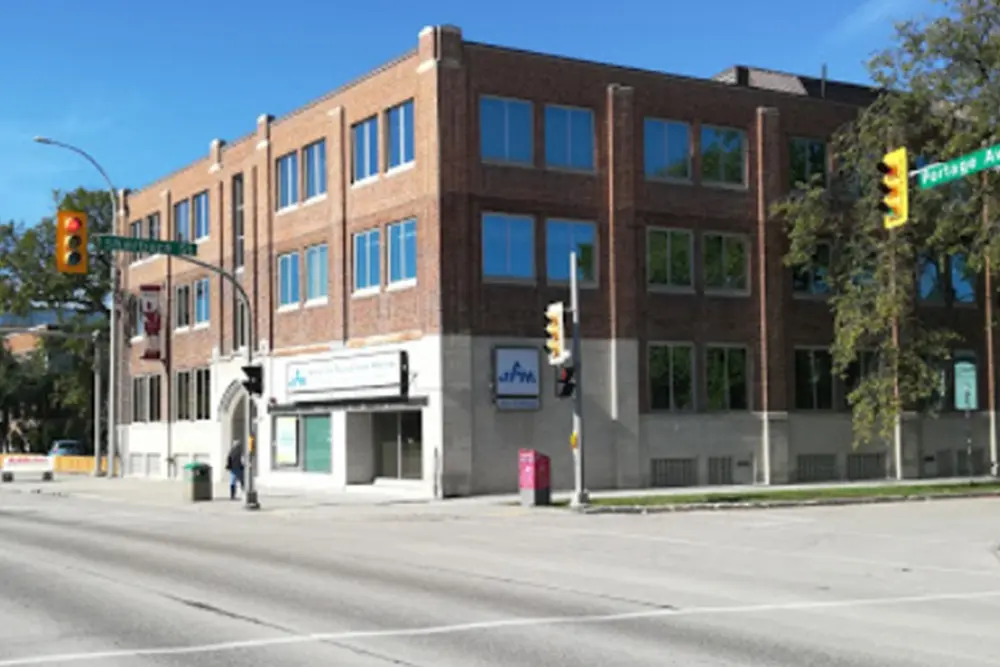
Bruce Oake Recovery Centre is a non-profit residential treatment centre on Hamilton Avenue in west Winnipeg. It welcomed its first residents in May 2021 and offers a 16-week live-in program with 50 beds. Global News reported in April 2026 that more than 600 men had graduated since it opened.
The centre is named for Bruce Oake, the son of sportscaster Scott Oake and his late wife Anne, who died of an accidental overdose in 2011 at age 25. The family set up the Bruce Oake Memorial Foundation in 2013 to build a long-term treatment centre in Manitoba, and the program was modelled on Fresh Start Recovery Centre in Calgary. It is accredited by Accreditation Canada.
Sixteen weeks of 12-step work and evidence-based therapy
Each stay starts with an assessment of substance use, mental health and any chronic conditions, which becomes an individual recovery plan. The core program runs 16 weeks and follows a 12-step model alongside behavioural therapies, with individual and group counselling, Dialectical Behavioural Therapy, Motivational Interviewing, Narrative Therapy, mindfulness-based CBT, Accelerated Resolution Therapy and Yoga Based 12 Step Recovery. Days are fully scheduled, with curfews and drug testing, and progress is reviewed regularly so the plan can change as needed.
Indigenous and Inuit programming led by Elders
The centre describes its approach as Two-Eyed Seeing, bringing Indigenous and Western healing practices together. Elders and Knowledge Carriers lead sweat lodges, pipe ceremonies, sharing circles, drum teachings and land-based activities, and an Elder gave the cultural program the name Mamawi Pinesiwak, or Gathering of Thunderbirds. There is separate programming for Inuit participants, including carving and the qulliq, and Métis-led care built around kinship, storytelling, traditional food and beadwork.
Outreach, Stage 2 housing and an alumni community
Before discharge, case managers help plan the next step, whether that is outpatient counselling, work, school or supported housing. An outreach team gives practical and emotional support for about eight months after treatment, and alumni keep access to counselling, case management, cultural programming and the building itself. For people who need more time, Stage 2 housing offers extended support with no fixed discharge date.
Bruce Oake Recovery Centre: Centre Overview
Bruce Oake is a long-term program. Many other residential programs in Winnipeg run 21, 28 or 45 days, while Bruce Oake keeps people for about four months and then follows them for months afterwards. Admission is voluntary and self-directed: you call the intake line yourself, and the Intake Coordinator does an assessment of about 20 minutes by phone. If calling is a barrier, staff can set up another way to do the intake.
The centre treats addiction as a chronic disease and frames its care as a continuum, from reducing harm through to long-term recovery. Staff include clinicians, counsellors, case managers and an outreach team. United Way Winnipeg reported in 2024 that more than four in ten participants are First Nations, Métis or Inuit, and cultural teachings run through the whole stay.
What's included in your stay
12 services · as described on the centre's websiteThe centre does not run a detox unit. You need to be abstinent and stable before your start date, and staff can coordinate detox off site if you need it. Medications are reviewed by the program director and medical partners before admission, and some people will need medical clearance.
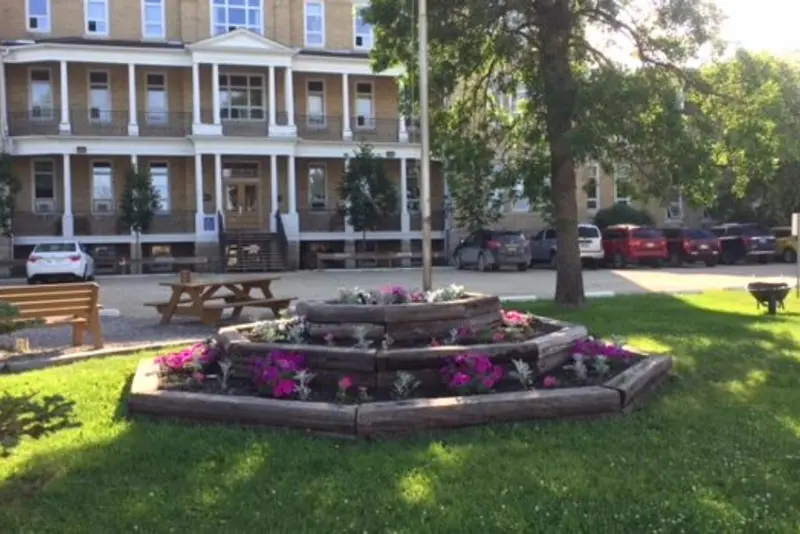
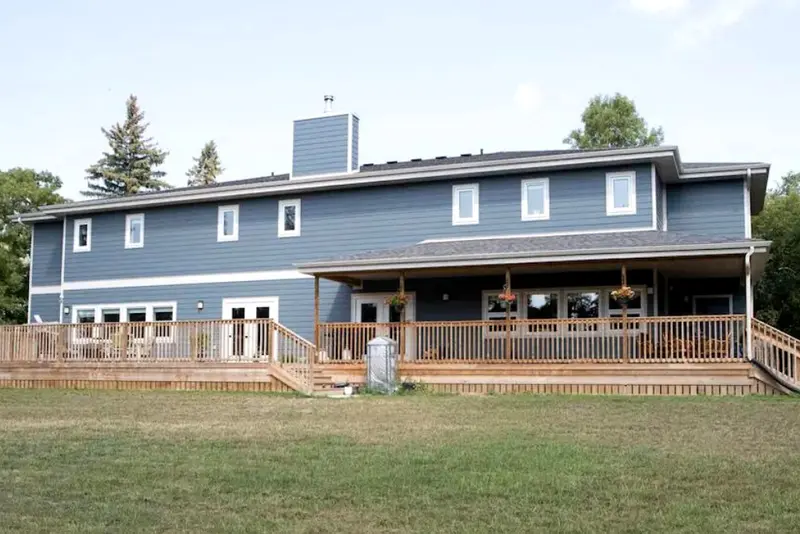
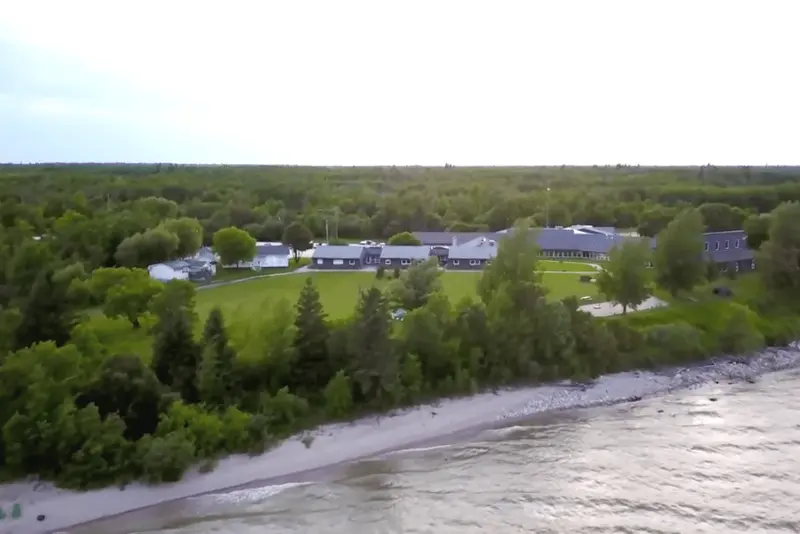
The building is a two-storey residence set back from the street on the western bank of Sturgeon Creek. It has a commercial kitchen, a smudge room, a computer lab, an exercise room, a family room and a community gymnasium, where the centre hangs a Winnipeg Jets jersey for each participant who reaches a year of sobriety.
Your program, stage by stage
The phases Bruce Oake describes on its Philosophy and Program pageCall the intake line yourself for a 20-minute assessment.
An assessment becomes a goal-driven plan built around your values and culture.
Counselling, 12-step work and therapies in residence, reviewed as you go.
Case managers plan counselling, work, school or supported housing.
Follow-up support, Stage 2 housing and a lifelong alumni community.